When I left my hills for high school in the capital at sixteen, I arrived armed with two proud achievements. First, I was a veteran of a private war, having battled astral beings in nightly sleep paralysis since childhood. Second, when the world tried to hammer my soul into the flat, linear sheets of algebra and indices in middle school, I had categorically refused.
My mind held to one non-negotiable truth: I was going to a science school to explore science on my own terms, but at no cost would I be beaten into thin sheets, salable on the free market. This karmic knowing had found its voice in an ancient mantra inscribed at the school library: Appa Dipa Bhava—“be your own light.” But my teenage heart, burning with defiance, heard a different command: outshine everyone; be your own fire—sovereign yet the brightest.
This ambition crystallized when I discovered a tape recording of Rajneesh, a voice from beyond life, revealing he had achieved enlightenment at twenty-one. I silently benchmarked myself against this twentieth-century prodigy, turning his legend into my finish line of evolution.
The Initiate
By age seven, life’s tests had begun, and I was already neck-deep in them. It was clear from the start that my karma had signed a pre-life contract: worst trials first in childhood, their hard-won wisdom to arrive when it arrived.
My nights fell into a ritual of terror. I’d go to bed after evenings spent playing on the riverbank, a place where locals whispered of ghosts congealed from the deep dark. The moment my eyelids began to flutter, those warnings would prove themselves true. I would be pinned down by shadow beings in an astral space laid over my own room.
It was a horror movie long before I knew what CGI was. I, a spectral stunt double, was hurled against walls, slammed into doors, and dragged into dark alleys—or sometimes even kidnapped by the air to be forced prostrate on an unknown shrine.
I was a victim of a brutal astral torture, a kid held captive within his own hologram while his body lay motionless in bed. I would scream, but that phantom cry never made it past the throat.
No mercy could wake me unless, rarely, the body staged its own crude revolt: a leg kicking into the void, a hand jolting against the wall—the primal flinch, a temporary short circuit in the paralysis.
The Misfit
Just as I was learning to navigate the inner terrain, a second siege began from without. At twelve, the war for my spirit opened a second front in a new school on the plains.
They introduced new languages: first the mathematics of Hellenic symbols, soon followed by the binary logic of code. These notations felt uninvited to me, stranger than the astral ghosts that at least had a home—the riverbank, the folklore, and the dark. I had managed to learn Devanagari and English, my first two scripts. But these new shapes—phi (φ), sine, cosine—looked like the prickly cacti that grew near my riverbank. They arrived without ancestry, without terrain, without shadow—from a world my mountains had no memory of.
The dizzying commands of HTML were so stubborn that one missing comma collapsed the whole thing—sterile, unforgiving, something my heart wasn’t used to.
Teachers urged me to rote-learn the rules first and build a foundation; my problem was with the very question of a foundation. “What legs do they stand on?” I’d ask. “On what ground? And isn’t rote-learning just fouling the currents of a native mind?”
Days later, teachers would arrive with a workaround, their faces bright with the finality of LHS = RHS. Am I older in spirit than these teachers? I would wonder. Their proofs were far shallower than my frustration. I started seeing no point in asking them questions; they hadn’t found the answers yet.
I began to suspect something was wrong with the whole arrangement. What bothered me wasn’t the difficulty of the subjects, but their deadness.
It felt like this system was designed to uproot spirit and nature, lashing human freedom to the flat grid of the free market. Knowledge was rarely offered as an end in itself, only as preparation for a livelihood. Every lesson pointed toward the same destination: examination and employment. Curiosity was tolerated only so long as it remained useful. I could not shake the feeling that something essential was being exchanged in the bargain.
“You can forge me in fire—fine. But you cannot beat me into thin sheets to be sold on the free market. I am not ductile. I am not refined,” I offered my teenage manifesto to the teachers, the foremen of the system.
The Capital and The Crucible
The city was where my father had attended high school, securing a government job before starting his family, and where my elder brother had finished high school before finding his exit abroad.
My family believed the capital’s sophisticated schools would finally instill responsibility in me. But my spirit, which refused to march in straight lines, only sprawled further into rebellion.
The education meant to fix me barely survived orientation week—my gaze kept slipping past the whiteboard toward the untamed city.
HODs spoke of career paths across the sciences—Molecular Biology, Physical Chemistry, Bioinformatics—each a collar with a different name. Admins warned of board exams, internal marks, and eligibility—their mandates never quite reaching my corner of the room.
From the back bench, I saw it: their uniform, a straitjacket; the tie, a lasso. I would count the yardage between myself and the whiteboard.
They could command my attendance or mark my number, but they could no longer claim my curiosity.
The city of shrines, pulled the other way, whispering possibilities I had no one to share with. The lecturers—my appointed guides who had already thrown markers at me—proved to be fresh graduates teaching between chapters of their own lives, speaking openly of corporate careers waiting beyond the classroom. The Proprietors, as I came to know, were less educators than business people; they had simply chosen minds over merchandise. The product was the same. They could just as easily have run canneries or distilleries. For them, I was a headcount on the free market.
The school system was a lineage of the lost, where the lost people manufactured more lost people, passing their own disorientation down like an inheritance. The lineage I was meant to join scorched me further away.
Frustrated, I threw kicks at hanging leaves and jumped railings on my commute. I did push-ups on school benches, sprinting down hallways between periods.
At sunset, billboards promising education that exported labor shone absurdly beside stalls where old people sold camphor wicks and jaggery blocks—the same parents, perhaps, whose children the billboards had already taken.
The capital, despite its carved eaves, proved itself to be a machine for flattening— the same war, just on a wider terrain, gripping minds while the roads outside crumbled.
Having refused the single cast they poured every student into, I decided to seize a left-hand path of education. For me, education only made meaning if it aligned with what the spirit yearned to learn in this lifetime.
A Left-Handed Education
I began visiting bookshops, hunting for texts on the marginalia of human experience: parapsychology, exorcism, anything strange. I wandered through the old nooks of the city to see centuries-old sculptures and architecture, scanning for proof that other ways of knowing had survived.
These visits to the inner city—a Hippie Mecca, as I would later learn—were addictive. Each one fed a hunger the classroom had no name for, sending me home carrying new desires, the way I once brought whispers home from the riverbank.
I began missing assignments and failed my first test ever. My refusal to trim my hair— those dear dead cells outside their jurisdiction that answered only to the wind, got me barred from the lab and ejected from classes for being “difficult to manage.”
In the evenings, I strolled the darkest streets alone, bristling and ready for a fight, issuing a challenge to any shadow that dared cross my path. I could feel how the astral realm thickened in the darkness, in the very spaces where most saw only chain snatchers or stray dogs.
It didn’t stop at the street’s edge. It followed me into sleep—the city had its own riverbank, its own dark, its own things that followed you home.
I would see myself as a young teenager in hill-worn clothes running, high above the clouds where eagles nested. No classroom had coordinates for where the dreams kept taking me. Sometimes chasing feral horses and failing badly. Sometimes seeing a lion, retreating. And rarely—from somewhere beneath fear—turning to chase it back.
I never caught a horse. But I learned to fly.
Dream-flight carried me across mountain ranges and unfamiliar valleys; yet the moment I encountered an ocean, my mountain spirit faltered, doubting its ability to cross the vast unknown expanse.
What waited on the other side could not be flown over. It had to be faced.
The Biforked Truth
I spent two years scavenging any path that looked different from the norm, aware this could be a liability for any straight career.
With the final exam looming, my knowledge was a scattered constellation: atomic theory and entropy, spacetime and natural selection, neurotransmitters, and this new word that fascinated me—neuroplasticity. All of it was a mere footnote to the official syllabus, falling outside even the long list of important questions lecturers handed out before exams.
And as pressure peaked, with everyone around me already planning ahead and my parents’ faces never far from my mind, my heart ran home to those forbidden fruits. I returned to the same chapters on epigenetics and evolution, pulling me deeper into territories the syllabus had no map for. This ungoverned reading revealed a truth I had felt but never seen: life was not merely karmic; it was a constant war on two fronts, neither of them new—the karma I arrived with, and the ancestral DNA unspooling in my physiology. They were two lineages of cause, bifurcated yet equally sovereign.
Metamorphosed by that pressure, something clarified: evolution was telling me that flight, for all its glory, was not the final answer. My own evolution, before the man in me had fully arrived at eighteen, demanded a new stance. The path was no longer flight from ghosts, or from lions, but to stand my ground and fight in the inner terrain. The kid under the spell of sleep paralysis demanded a conscious fight. I faced my exams not as academic filters, but as acts of resistance.
Beyond them, waited the next inevitable step: college or a job, for neither of which I was ready. It loomed like a larger, more sophisticated grid; a new lion had already begun stalking me from the future.
This insecurity became a whetstone, sharpening the only skill native to me: observation. For days and nights, I became a sentry at the gate of my own mind, patrolling the elusive border where waking thinned into dream. Breath after breath, I went so deep into the watch that I lost all sense of which side of awareness I was on.
The inner life keeps its own accounts. What is left unresolved does not disappear; it waits. One night, my dreams resurrected forgotten worlds—bringing me two lucid tests I have since regarded as the twin sutras of a lifetime: one of force, the other of finesse.
The Rollback: The art of Finesse
I woke up as a kid again—in that false light that belongs equally to dawn and dusk, where even the hour refused to take sides.
I felt abandoned even before my eyes looked for my parents and found no one. Fighting a rising fear, I slipped out onto the patio and drifted toward the cowshed. The cattle oven was cold; no gruel simmered.
Outside, the moon hung low; in the dim silence, I reckoned they were still at the grocery store a mile down the road. I dashed for the field—a shortcut I knew better than the long, solitary mile I wasn’t sure I could face alone.
It felt like straying, not freedom. I looked back in desperation. The trail home was gone. My village lay in darkness, unlit before the days of electricity.
Just as the locals whispered, I began to feel ghosts congeal from thin air. The more fear I felt, the denser they became.
“You will be given to a Shaman to be sacrificed, like your best friend who didn’t return from the river on that monsoon evening.”
One voice from my childhood returned—a woman in a distant village, rumored to practice witchcraft, who claimed to know of me as the kid born on a full moon winter solstice.
Instinctively, my hand shot beneath the pillow for the metal—a brass compass a junk shopkeeper had once pressed into my palm. But my gaze caught on them in the moonlit dark: a man’s hands—veiny and strong.
“Bring me your Shaman. I’ll face him. I am ready to die among the cacti; I return the spirit home, but I refuse your terror henceforth.”
In the resonant silence that followed my challenge, something clarified: I had always received fear with more fear. But the ghost was not facing the scared child of the riverbank tonight. It was facing a high schooler who had spent years walking toward the dark rather than away from it.
Something snapped. My inner compass found true north. The directive was now absolute: Withdraw.
I left my body frozen. On the astral plane, I retreated from it all—the riverbank, the cacti, the stones, the bedroom, the stolen childhood, the very image of my parents. I severed every thread of sentiment, gathering the scattered self home.
What remained condensed into a single still point—a wormhole to reality. This was the unwavering mind, the screen behind the movie, the one who knew: I am the sleeper in the high school dorm.
The phantom collapsed inward, condensing into a dense vibration that rose from somewhere below the ribs—the body calling itself back into being, dense and particular—mine.
The dome light resolved into view—it had been masquerading as the moon the whole time. The knocking on the door was no longer an intrusion, but an invitation. “It’s dinner time,” a voice called.
The Viking Dive: The art of Force
I stood at the door of a room I hadn’t seen in years—the one I’d shared with my elder brother back in the plains, during my middle school years.
Every detail returned exactly—the study table, the curtain, twin beds, my sketches on the wall held up with cheap gum. A single line of unfinished equation on my Notebook caught my eye—I leaned in, and it read: ∑(x – x) = ?
The prickly little equation triggered an old anxiety: Had we forgotten to pay the rent? The food? Had anyone been keeping count? Five years. Maybe more.
I pulled back the curtain out of habit, expecting the familiar street. Instead, I saw a terrifying, raging ocean, as if the house perched on a cliff at night. This is impossible! Nepal is landlocked. An ocean? You’re dreaming old friend. My lucid awareness whispered.
Some forgotten idiom floated up like a command from below the dream: “If there’s a tornado, dive into its eye.”
I climbed onto the windowsill. Just as I prepared to jump, I heard the homeowner’s voice: “We will have rice pudding for lunch, Saroj stay! We got extra milk from the farm today.”
Amused by the absurdity, I stepped down. Proud that I was okay with jumping and okay with staying, while in the background the knowing remained firm and anchored that I was dreaming.
I walked the hallway, feeling the dream render each frame in real time. I wanted to see how the kitchen had evolved.
The homeowner’s little daughter, tiny and happy, unchanged through years, padded carefully down the stairs but tripped anyway, spilling milk.
This snapped me back to my purpose. No more flight. Time to fight the lion, I said to myself. Agreeing to descend to a primal mind, I climbed back onto the frame and took a nosedive, the fall stretching slow-motion into the abyss.
A ferocity that even lions would retreat from. A feat so contrary to every instinct of my survival that the mind had no visual for what came next—the fall never landed.
The Hologram crashed. The Reality collapsed into a dense vibration, condensed into a single point of heat at my navel. I was thrown back into waking life, fully charged and awake.
Back to the Hills
I returned to my hills with a lighter spirit, long curls, and a well-built body, carrying something that had no name in any syllabus.
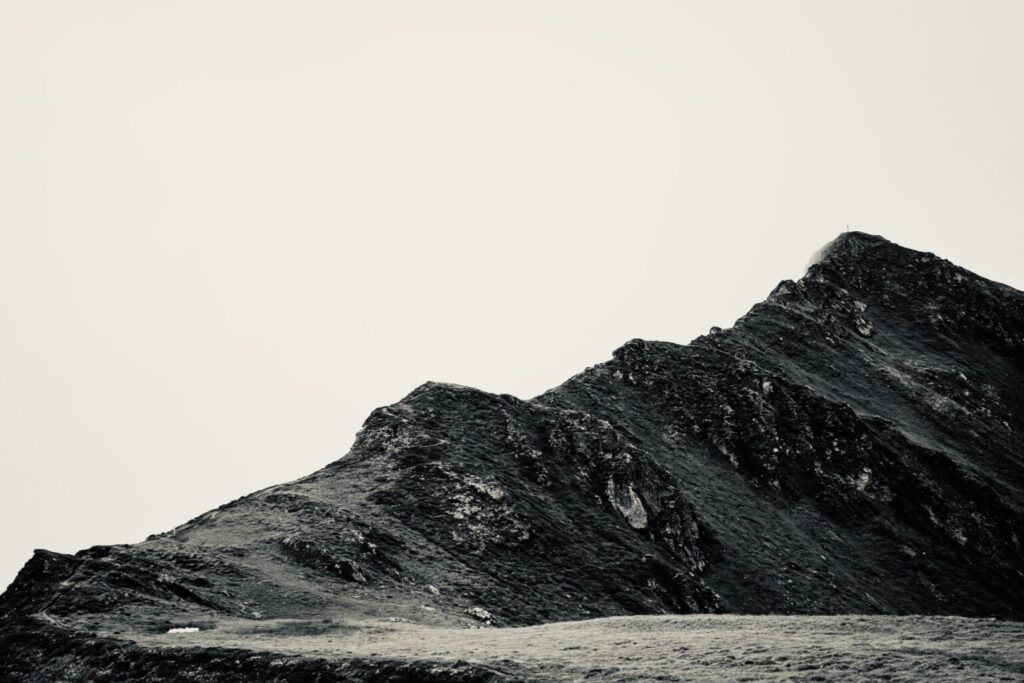
Childhood was formally over, yet I remained the same lone observer on the riverbanks and trails, still sliding through experiences, each pass a little deeper than the last, each return a little wiser, carrying an unclaimed childhood joy under the mystical shade of the Himalayas.
Realizations overlapped—what felt supremely important one day quietly gave way to the next, all on the same finite canvas. But those dreams became the legends of a lifetime. They were founded upon two tectonic plates beneath my psyche: Patience and Courage, hammered into being across the whole of my childhood, blow by blow.
Long before life granted me the freedom to choose where to fight, it taught me, brutally, how to accept and endure, and to build my foundation not despite the shadows, but precisely where they lingered.
When my peers emailed photographs from the graduation ceremony, I felt no absence. I had never belonged to that particular arrival. The diploma I valued was woven into my mind-body fabric, earned through the twin arts of force and finesse: a sovereign knowledge, unhooked from any system.
The harvest
The first dream revealed the Sutra of the Rollback: a bottom-up ascent from the world of Samsara, through the body-mind, and into pure awareness. This is Pratyahara, the art of recalling awareness inward from the senses, through the mind, and back to the source. It begins with a single realization: you are trapped in a hologram of your own making, whether a dream, a personal drama, or a prefabricated destiny.
The first act of sovereignty is to stop and observe. You cease feeding the phantom your attention. This is not a mental act; it happens beneath thought, at the level where the phantom was first constructed.
Next, you perform the great reversal: you gather your scattered awareness and roll it back to the core of your mind, the wormhole to the soul. It is the lone child finally leaving the haunted play of the riverbank to return home.
Rollback is the conscious undoing of projection: the seer, with great discipline, reclaiming itself from everything it has become lost in. This is the way of Gyana.
The Viking Dive, on the other hand, demands the heart of a Viking—one whose clarity is a blade severing the negotiable from the non-negotiable. Where the Rollback ascends, the Viking Dive descends: from clarity into action, from the self through body-mind, into the world.
This sutra works for traps built not merely in your mind, but into the very fabric of Samsara. When you are trapped in a system—whether a dream, a dogma, or a life that feels scripted—you must perform an act so definitive, so contrary to its fundamental logic, that the system has no answer for it. You do not negotiate with what you see as shackles; you tear them apart. This is the way of Action.
Thus, all reality—the inner dream no less than the outer world—rests upon two ancient inheritances: the personal Karma and the Ancestral Contract written in your DNA, evolution’s living echo. To defy this Contract with awareness, or to shatter it with action, is the ultimate act of sovereignty.
The Rollback returns you to the source, collapsing local illusions. The Viking Dive reveals a fundamental truth: the canvas of the world is woven from the very fabric of your soul. You can retreat into this fabric with finesse, or you can tear through it with force. Either way, a deeper, subtler foundation will always claim you.